
GANBUY NANJA: REWOVEN STORIES
These are stories from the Numbulwar women about their weaving artworks.
Trivet
Rose Wilfred
Cat# 563-25
$80
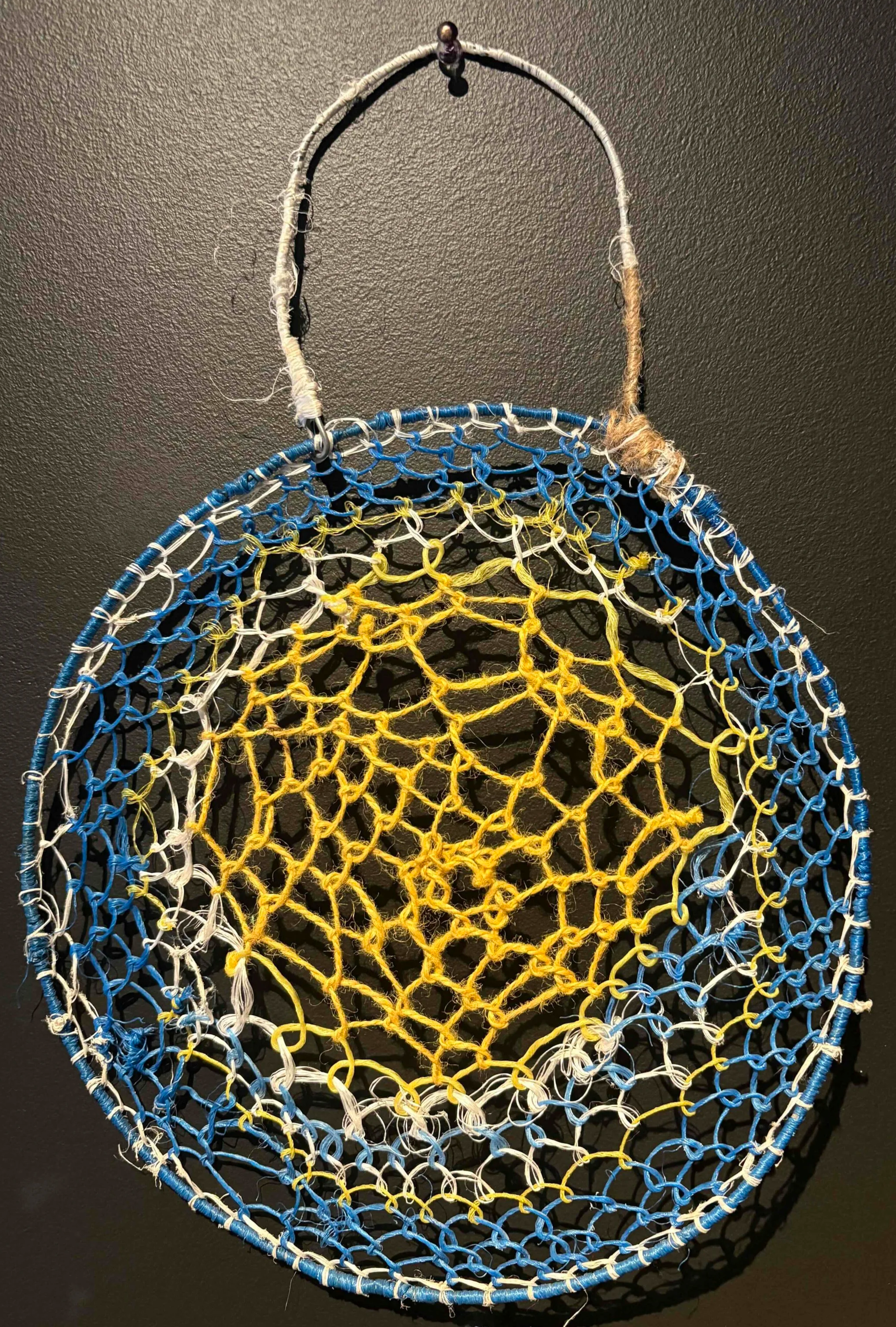
Bold, bright and brilliant, these colourful coils are made from a combination of abandoned fishing lines, known as ghost nets, and thoughfully repurposed found fibres. Nothing is wasted. Ghost nets account for about 40% of all ocean plastic. Numbulwar fibre art diverts this plastic away from the oceans, keeping nets clear of vulnerable sea life. All materials are sourced locally in Numbulwar.
Bubutj (wild cat) + 2 + 3
Joy Wilfred
Cat# 701-25
$195
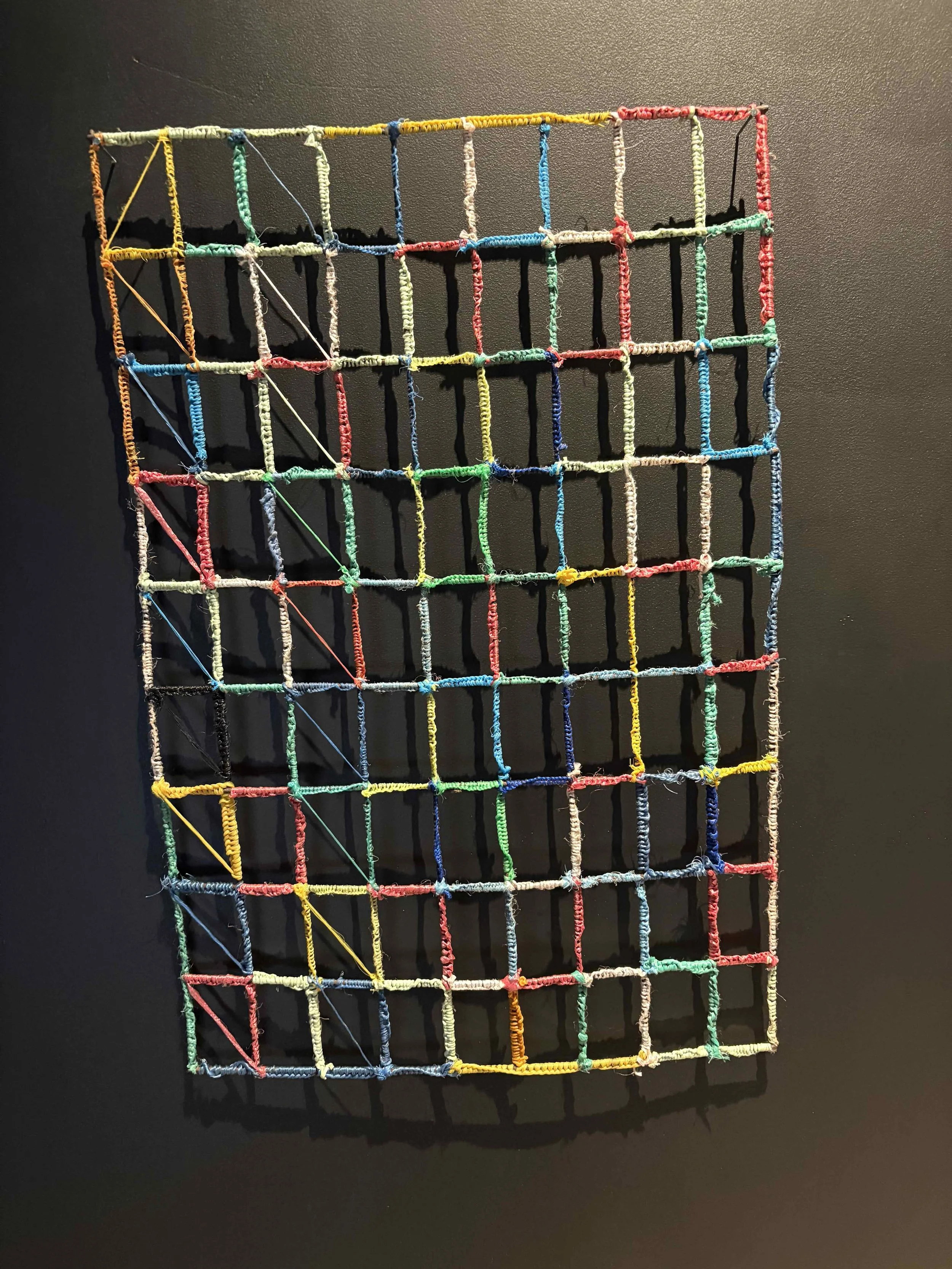
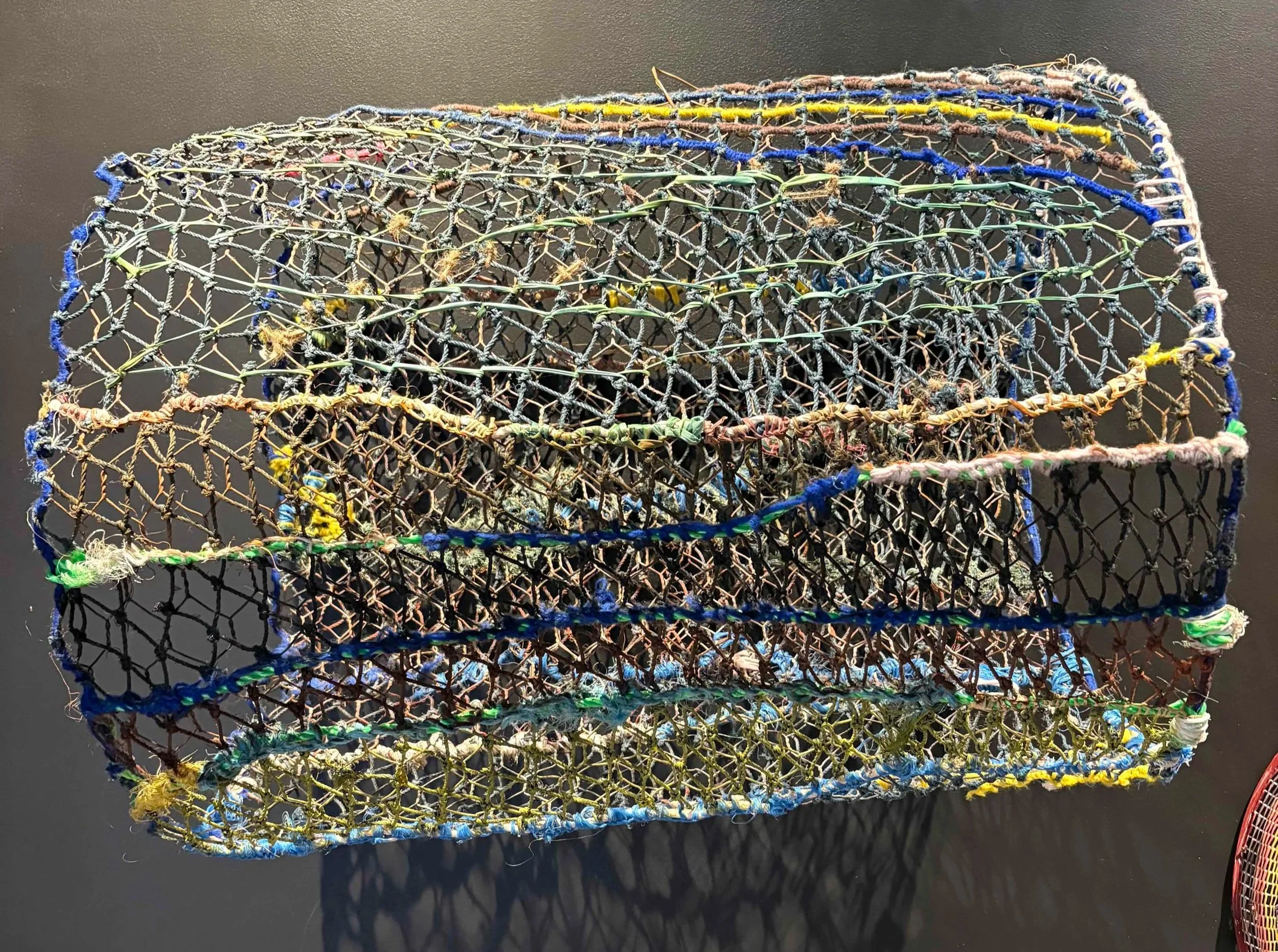
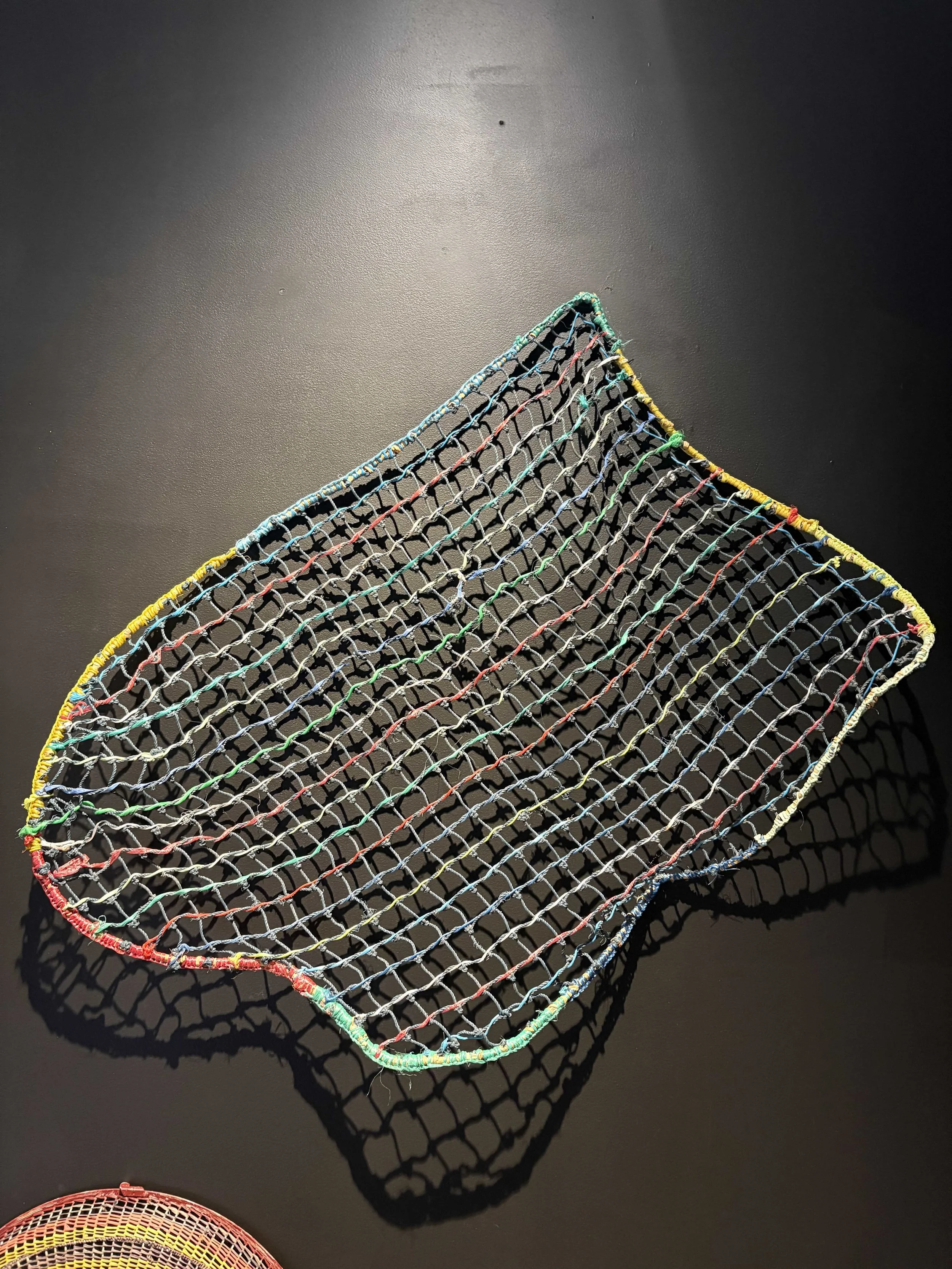
This is a rabbit or wild cat trap in three parts. Those are strangers to the bush, they are not supposed to be here.
"Old people - olenders - would try to catch them for food. They would see them on the tree and with a stick, hit them. They would make a fire and eat them - not us mob" says Rose, Nicola and Megan Wilfred.
Baby trap - baby carry
Joy Wilfred
Cat# 285-23
$150
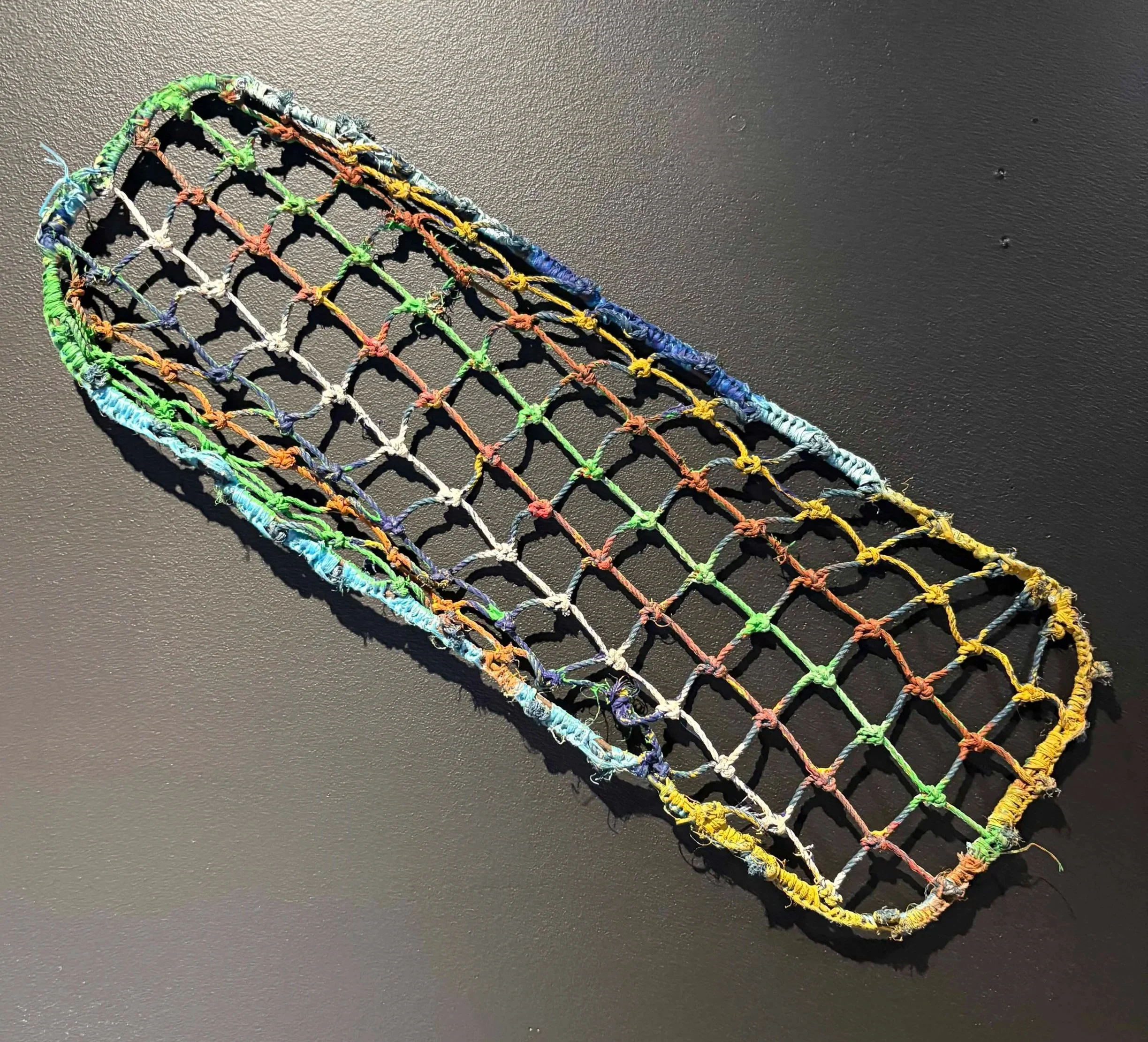
This piece is inspired by the shape of a traditional baby-carrying basket, but here it is re-imagined using metal and woven fibres. The long, rounded net form suggests the way a baby is held close - protected, supported, and carried with care. Each knot reflects the gentle strength needed to hold a child, while the open weave allows light and air to move through, like breathing. The colours echo earth, water, and plant life, grounding the work in family and country. This artwork is about carrying life forward - one knot, one step, one breath at a time.
Snake trap
Virginia Wilfred
Cat# 304-22
$210
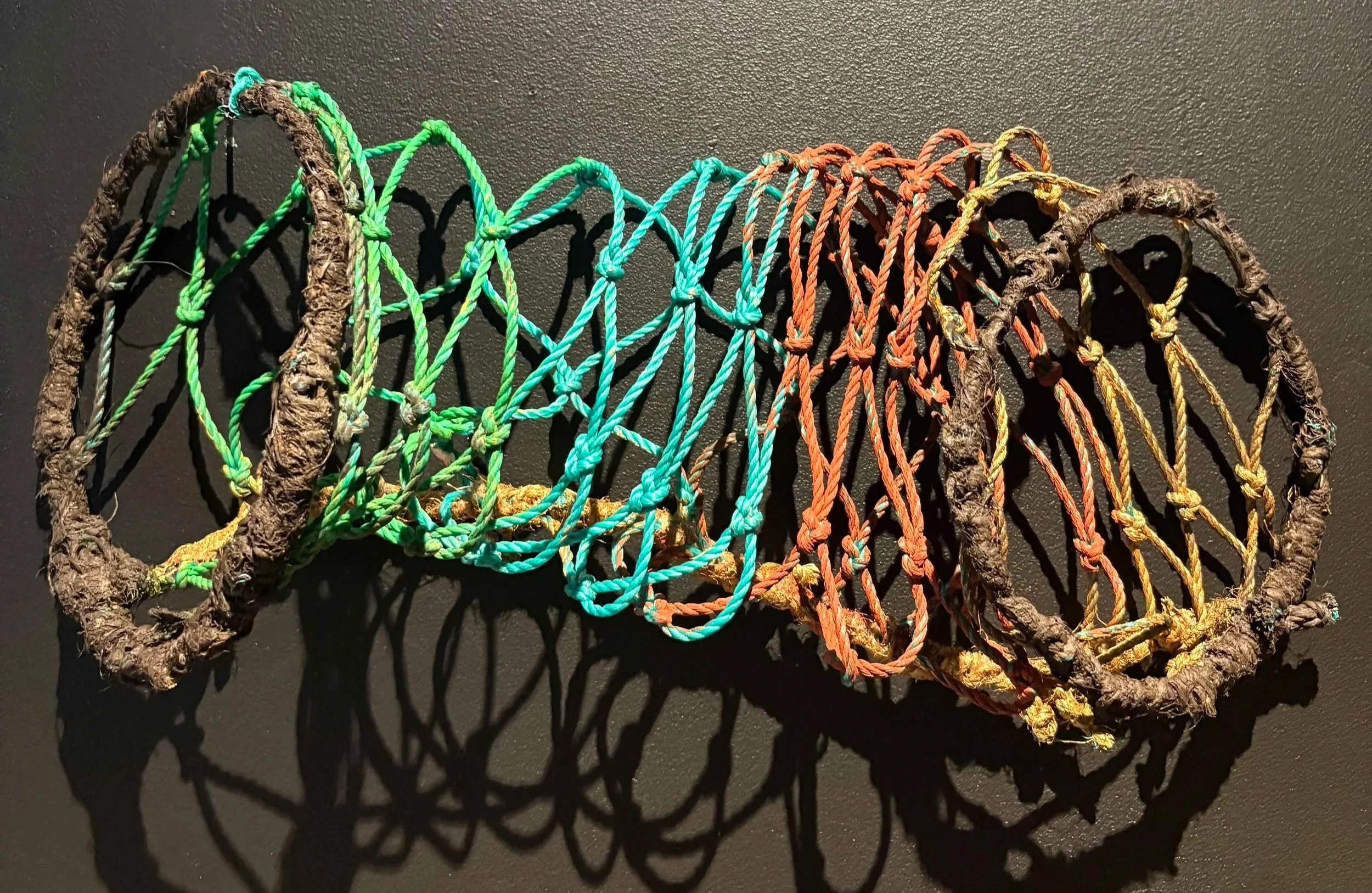
This woven sculpture is made from old ropes once used to catch creatures of the river and sea. By reshaping the trap into an open, spiralling form, I turn a tool of capture into a story of connection. The colours and knots echo the worlds of crab, snake, crocodile, fish - animals of strength, danger, and deep memory. Instead of trapping them, the work honours their movement and their place in the water. This is a reminder that every trap carries knowledge, and every rope holds a story. Here, the trap is open. It does not capture; it remembers.
Bird trap
Virginia Wilfred
Cat# 703-25
$210
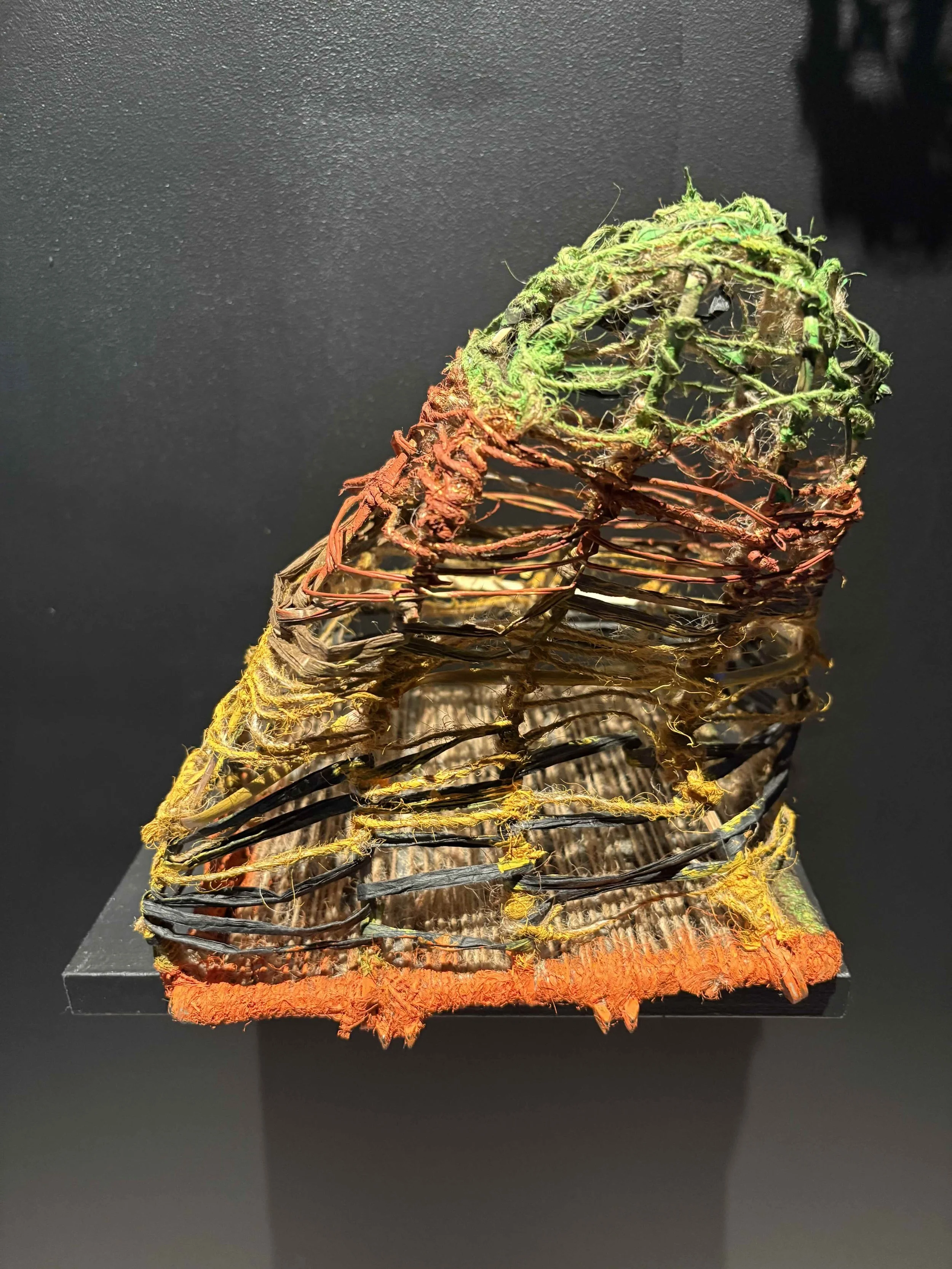
This sculpture is inspired by the shape and memory of a traditional bird trap. Built from reclaimed rope, plastic, and twisted fibres, the structure rises in stacked layers - like a small tower of stories. Each layer represents a moment of watching, waiting, and understanding the behaviour of birds. A bird trap is not only a tool; it is knowledge. You must know how birds move, where they rest, how they fly, and how they escape. This artwork honours that quiet observation. The open weave shows that the trap is no longer meant to catch. Instead, it becomes a reminder of the connection between people, land, and the creatures that live above us. The colours - earth, vine green, red dust - reflect the environment where these traps were once placed. Here, the trap holds only memory. Not the bird.
Lharagula Ngididin (Crocodile trap)
May Wilfred, Joy Wilfred, Rose Wilfred, Nicola Wilfred, Rena Guyula, Virginia Wilfred
Cat# 592-25
$5225
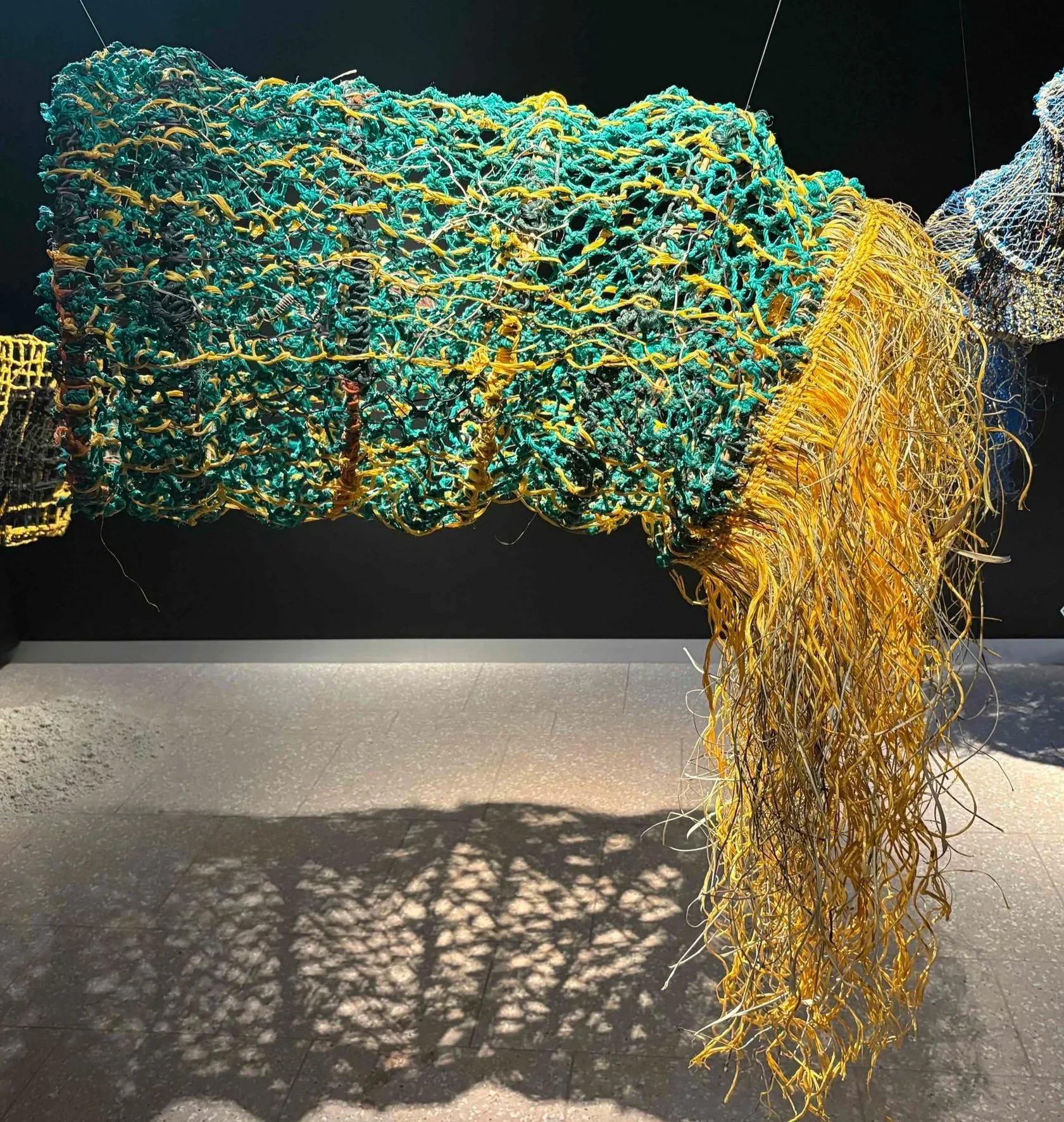
An imagined object, a crocodile trap is not a traditional hunting tool but, like the use of ghost nets in weaving at Numbulwar, is something that these weavers have instigated themselves. Numburindi artists are innovatively tackling the issue of ‘ghost nets’, a term for fishing nets that are hacked off commercial fishing vessels and abandoned in the water. Believed to make up 30-50% of all ocean plastic, ghost nets are a massive issue globally, however it is more problematic for some. Ocean currents carry ghost nets from all over the world into the Gulf of Carpentaria, where they harm vulnerable marine life, damage coral reefs and wash up on beaches where they end up buried in the sand or entangled in trees. A subtle and humorous act of resistance and self-determination, Lharagula Ngididin (Crocodile Trap) turns the onslaught of external forces into a source of power, while reiterating the unwavering connection between Numburindi people, their Country and the life that exists within it.
Crab trap
May Wilfred, Joy Wilfred, Shenellie Mamrija, Karishama Wilfred, Rena Guyula, Virginia Wilfred
Cat# 632-25
$2525
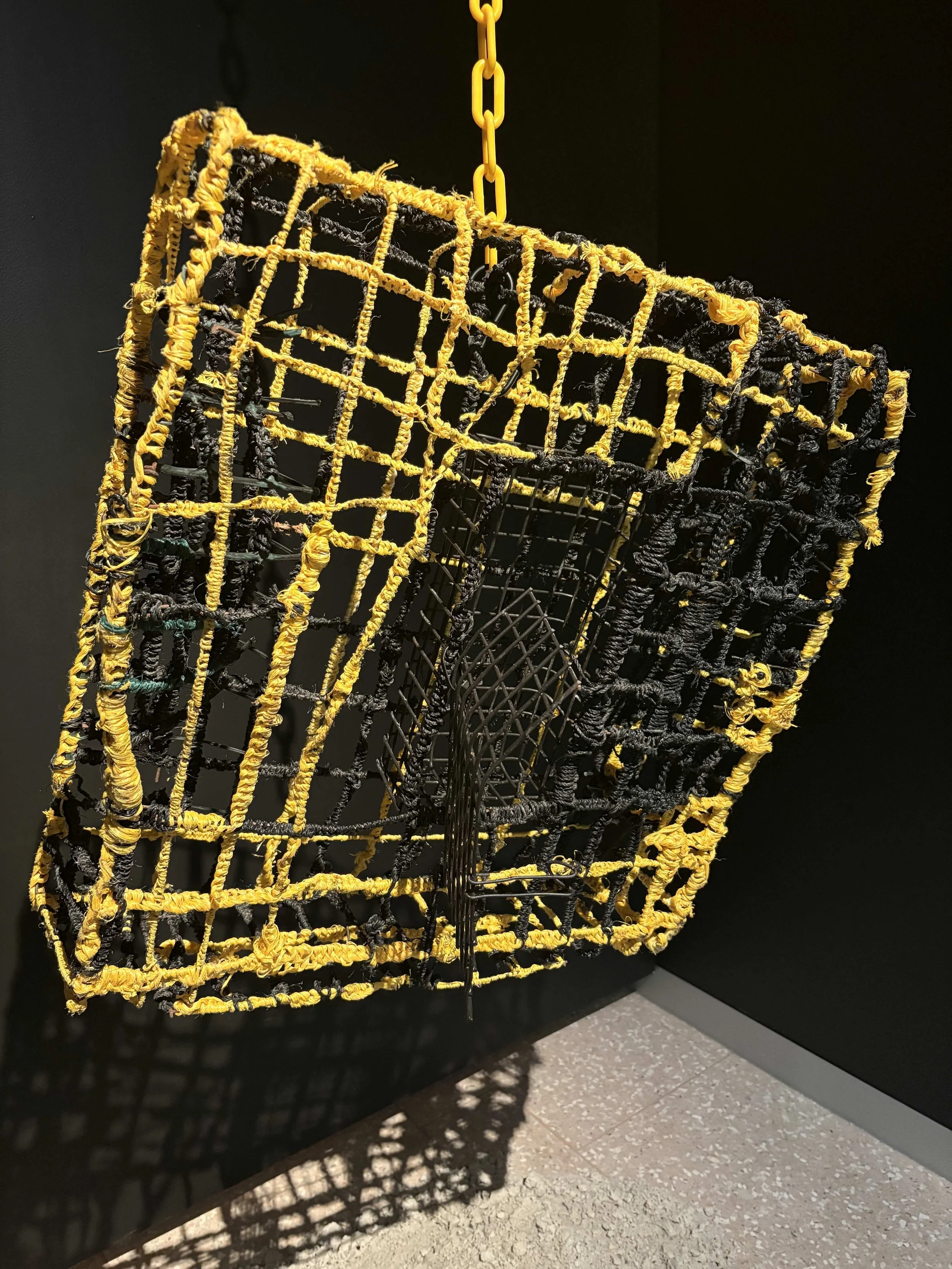
"In Numbulwar we get mud crbs with sticks and sometime spears. Now, sometime, we use crab pots but the crab is strong and he breaks the trap. This broken one we took it and we weaved it. It's alive again" Rose Wilfred.
Lharagula Ngididin (Crocodile trap)
Nicola Wilfred
Cat# 499-22
$1750
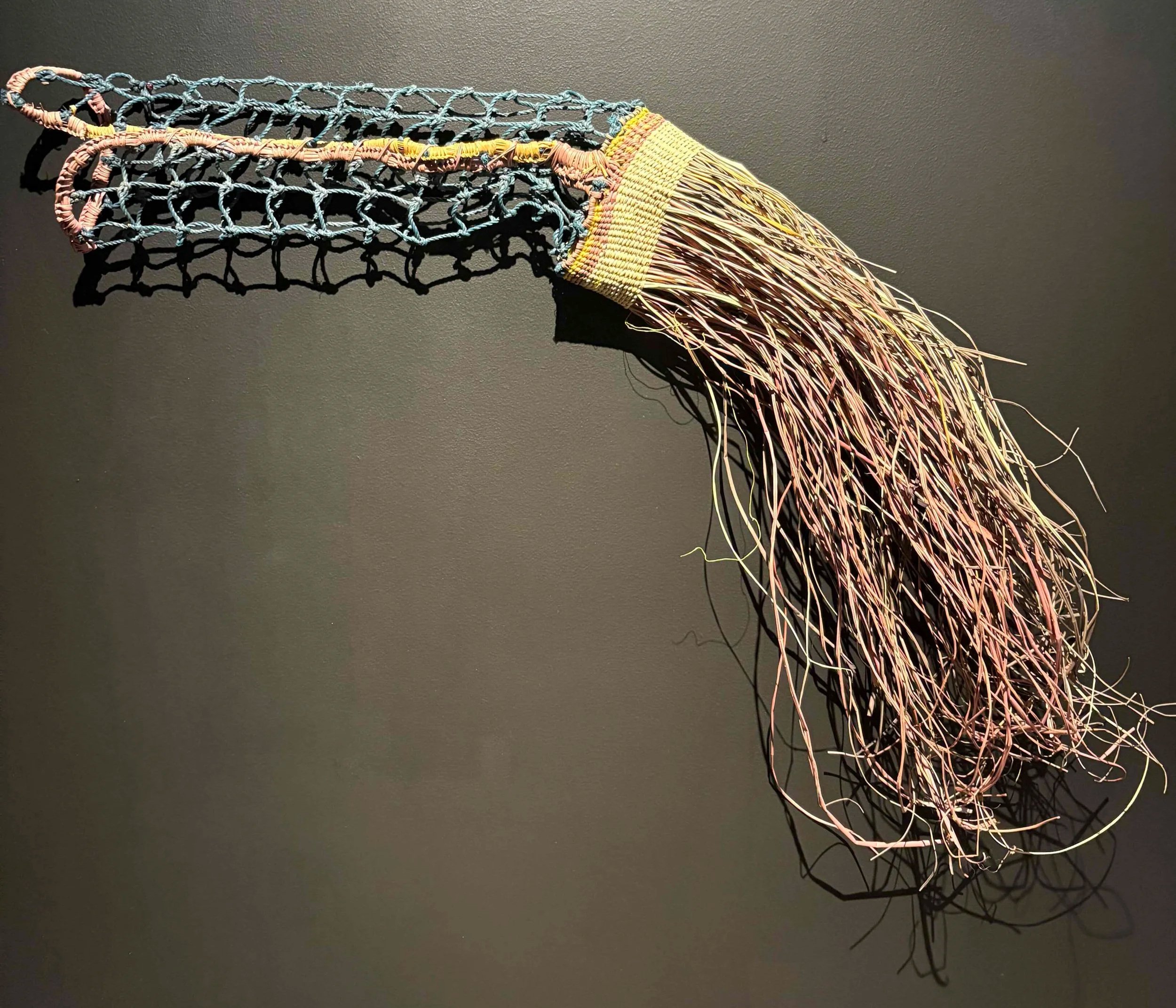
"We collect ghost nets from Numbulwar’s shores. I choose to transform these discarded materials into meaningful works. My practice reclaims materials from the fishing industry's mass production, giving new life to plastic waste while sharing my powerful cultural narratives. I soak, scrub and sometimes dethread the nets to make them ready for weaving. I combine it to the pandanus to remember our traditional practice. Through this process, I not only reimagine the purpose of ghost nets but also highlight their environmental impact. Lharagula Ngididin (Crocodile Trap) is not a hunting tool, but an imagined and poetic object. I combine traditional pandanus with contemporary ghost nets to speak about Country and send a warning. Like many sea creatures, perhaps even crocodiles have been trapped in it. Ella Doonan said ‘This work is an act of resistance and self-determination.’ I’ve inspired others too. Together with my Walgilag clan, we created a 290cm Lharagula Ngididin. Who knows - maybe it will catch a crocodile after all!" Nicola Wilfred.