
OPENING EVENT:
SATURDAY 24 OCTOBER, 2PM
WELCOME TO COUNTRY + SMOKING CEREMONY
///\\\///\\\///\\\
OPENING PERFORMANCE BY TE WHARE HAKA O NĀRAMA
Proudly presented as part of Radiant Pavilion Contemporary Jewellery and Object Biennial 2026

Bagurrk Murrup–Kotahitanga brings together words and concepts from Aboriginal and Māori languages:
bagurrk refers to women in Woi-wurrung,
while murrup evokes spirit or lifeforce, and
kotahitanga speaks to unity, togetherness and collective strength in te reo Māori.
The title reflects an exchange between women from diverse Aboriginal language groups across Australia and Māori iwi of Aotearoa.
Bagurrk Murrup – Kotahitanga is a landmark exhibition bringing together contemporary Māori and Aboriginal wāhine jewellers for the first time. Presented in Naarm (Melbourne) as part of Radiant Pavilion 2026 at Blak Dot Gallery, the exhibition creates a space for connection, exchange, and collective presence across Te Moana-nui-a-Kiwa.
Grounded in the principles of kotahitanga and whakawhanaungatanga, this kaupapa centres Indigenous ways of knowing, making, and being. Through adornment, each artist carries stories of whenua, whakapapa, and identity — activating jewellery not only as wearable form, but as a vessel for memory, resistance, and cultural continuity. Together, these works form a layered dialogue that speaks across generations, geographies, and lived experience.
Representing Aotearoa are Areta Wilkinson, Gina Matchitt, Neke Moa, Turumeke Harrington, Tiahuia Arapeta, and Keri-Mei Zagrobelna — a collective of wāhine whose practices are grounded in mātauranga Māori and contemporary adornment. Their work reflects deep relationships to material, ancestral knowledge, and the ongoing evolution of Māori visual language.
They are joined by Aboriginal artists Maree Clarke, Lisa Waup, Juanita McLauchlan, Carly Tarkari Dodd and Molly Mahoney. Together, these artists bring powerful practices grounded in Country, cultural revitalisation, and intergenerational knowledge. Their work spans jewellery, adornment, and installation, often activating traditional techniques alongside contemporary materials to assert presence, resilience, and sovereignty.
Bagurrk Murrup – Kotahitanga marks a significant moment of Indigenous exchange — one that not only acknowledges shared histories of colonisation and survival, but also celebrates the strength, innovation, and leadership of wāhine artists working today. This exhibition creates space for visibility on an international stage, while nurturing relationships that extend beyond the gallery context.
At its core, this is a kaupapa of connection — honouring where we come from, standing in who we are, and shaping the creative futures of Indigenous adornment.
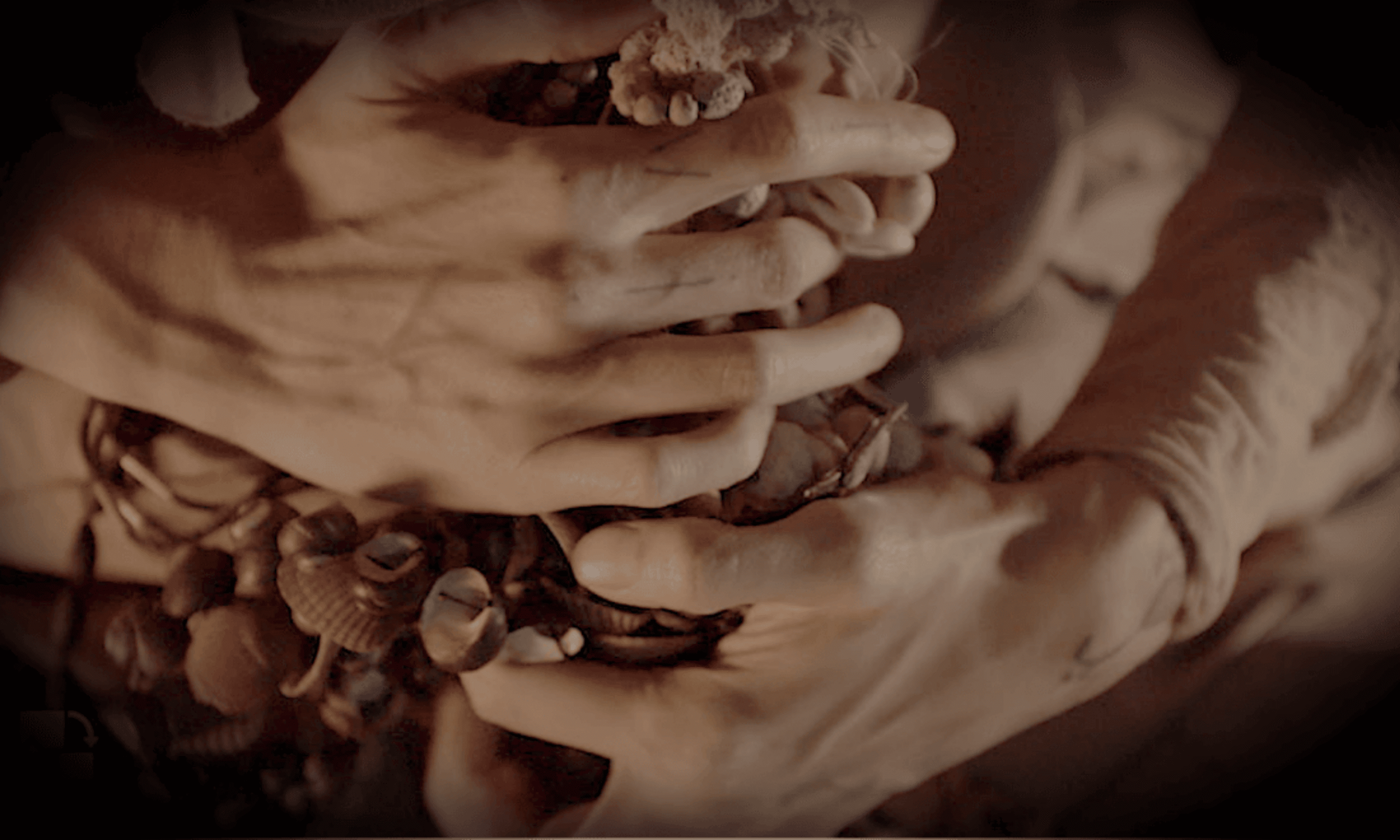
Keri-Mei Zagrobelna, Still from ‘Te Pito’ moving image artwork, 2023, featuring Jahra ‘Rager’ Wasasala. Videography by Pikihuia Haenga. Sound by Emily Bernard.
PUBLIC PROGRAM
Yarn circle / kōrero with artists of Bagurrk Murrup–Kotahitanga
Date: Sunday 25 October
Time: 2-3pm
Level 2, Room 204
What can a piece of jewellery carry?
Bringing together the wāhine artists of Bagurrk Murrup – Kotahitanga, this kōrero looks at jewellery and adornment as ways of holding stories, connections to Country and whenua, memory and resistance.
EXHIBITING ARTISTS
-
Tiahuia Arapeta (Ngāti Raukawa Ki Te Tonga, Te Whānau-Ā-Āpanui, Ngāti Whakaue) is a contemporary Māori artist and multidisciplinary creative working across jewellery, sculpture, painting and drawing. Her practice explores wāhine Māori identity, whakapapa, healing, and the reclamation of self within and beyond colonial frameworks.
Materiality plays a central role in her work, with found and symbolic materials often guiding conceptual development. Drawing from Toi Māori values and forms, Tiahuia creates deeply personal works that speak to cultural reconnection, resilience, and transformation. Her 2022 work Poutama was runner-up in the Wellington Regional Arts Awards.
-
Maree Clarke (Mutti Mutti/Wamba Wamba/Yorta Yorta/Boonwurrung) is a pivotal figure in the reclamation of southeast Australian Aboriginal art practices, reviving elements of Aboriginal culture that were lost – or laying dormant – over the period of colonisation, as well as a leader in nurturing and promoting the diversity of contemporary southeast Aboriginal artists.
Maree’s continuing desire to affirm and reconnect with her cultural heritage has seen her revivification of the traditional possum skin cloaks, together with the production of contemporary designs of kangaroo teeth necklaces, river reed necklaces and string headbands adorned with kangaroo teeth and echidna quills, in both traditional and contemporary materials such as glass and 3D printing.
Maree’s multimedia installations of photography including lenticular prints, 3D photographs and photographic holograms as well as painting, sculpture and video installation further explore the customary ceremonies, rituals and language of her ancestors and reveal her long held ambitions to facilitate cross-cultural dialogue about the ongoing effects of colonisation, while simultaneously providing space for the Aboriginal community to engage with and ‘mourn’ the impact of dispossession and loss.
Maree is known for her open and collaborative approach to cultural practice. She consistently works in intergenerational collaboration to revive dormant cultural knowledge – and uses technology to bring new audiences to contemporary southeast Aboriginal arts.
Maree Clarke has exhibited widely both nationally and internationally, and in 2021 she was the subject of a major survey exhibition Maree Clarke – Ancestral Memories at the National Gallery of Victoria. Maree received the Doctor of Arts honoris causa, in recognition of her exceptional leadership and impact on southeast Australian Aboriginal art and cultural practice (2O25).
"My art is about regenerating cultural practices and passing this cultural knowledge onto the next generation... we haven’t lost anything; some of these practices have just been laying dormant." — Maree Clarke
-
Carly Tarkari Dodd is an artist and curator of Kaurna, Narungga, and Ngarrindjeri descent, known for creating contemporary woven jewellery and sculptures. She was taught traditional weaving by Ngarrindjeri Elder Aunty Ellen Trevorrow at a young age. Dodd’s work explores First Nations activism, cultural resilience, and highlights the contrast of Indigenous experiences with forms of colonial power.
Her work has gained noteworthy recognition, with recent features at Australian Fashion Week on the David Jones Indigenous Fashion Projects Runway and in Vogue Australia magazine.
In 2018, Dodd was honoured as South Australia’s NAIDOC Young Person of the Year. In 2023, she was a finalist for the inaugural MAKE Award: Biennial Prize for Innovation in Australian Craft and Design, and in 2024, her impact continues to grow, with a nomination for two National Indigenous Fashion Awards. Carly’s works are held in both public and private collections across Australia, and she has exhibited at the National Gallery of Victoria (VIC), Australian Design Centre (NSW), Mars Gallery (VIC), JamFactory (SA) and Adelaide Contemporary Experimental (SA).
-
Turumeke Harrington (Kāi Tahu, Rangitāne) is based between Te Whanganui-a-Tara and Ōtautahi, working across sculpture, painting, printmaking, jewellery, design, and installation. She is interested in exploring how objects, material and colour can subvert, challenge and express mātauraka Māori.
Currently practice has been digging deep into the landscape—conceptually and physically—spending time gathering whenua from across the motu to produce earth pigments for painting, exploring her whakapapa to place, and wrestling with pervasive regional representations of landscape in our art histories.
Recent exhibitions include Ruawharo (whatever sucks you in babe) at Christchurch Art Gallery Te Puna o Waiwhetū with frequent collaborator KOMMI, Errors Era at Page Galleries, Tā, Tau at Wairau Māori Art Gallery, HOME GROUND / Kororiwhatepō at Page Galleries and STUMPING GROUND at Te Uru Waitakere Contemporary Gallery.
-
Molly Mahoney is a proud Boonwurrung, Barkindji, and Wemba Wemba woman whose artistic practice is grounded in the continuation of ancestral knowledge. Guided by the teachings of the women in her life, Molly carries forward cultural traditions that have been practiced on Country for countless generations.
She works across a variety of mediums, including possum skin cloaks, dance pelts, river reed necklaces, and feather pieces. Molly thoughtfully blends traditional techniques with contemporary materials and methods, creating works that honour the past while speaking to the present. Molly’s art is an act of cultural continuation—each piece a reflection of her deep respect for Country, family, and the power of matriarchal knowledge. Through her work, she honours her Ancestors and strengthens the cultural threads that weave past, present, and future together.
-
Gina Tawhai Matchitt (Ngāti Ngahere, Whakatōhea, Ngati Rangitihi, Te Arawa), grew up in Rotorua and graduated with a Diploma in Jewellery from Unitec School of Design in 1994, followed by a Masters of Māori Visual Arts from Massey University in 2011.
Her art practice explores the traditions of Te Ao Māori and their place in contemporary life, often by adapting and combining customary Māori patterns and techniques with modern materials such as recycled computer keys, stickers, fabric, photographs, and duct tape. Te reo Māori text appears frequently throughout Matchitt’s work, reflecting her ongoing interest in language, communication, and cultural continuity. Her artworks are held in major national collections including Te Papa Tongarewa Museum of New Zealand, Auckland Art Gallery Toi o Tāmaki, Auckland War Memorial Museum, and The Dowse Art Museum.
Alongside her art practice, Matchitt has developed a curatorial career. As an independent curator she has developed exhibitions such as Ngā Hokohoko (The Dowse), Autonomous Bodies (New Zealand Portrait Gallery), and Diane Prince: Activist Artist (Pātaka Art + Museum). She is currently a curator at Te Whare Taonga o Waikato Museum & Gallery in Hamilton.
-
Juanita McLauchlan is a contemporary Gamilaraay artist living on Wiradjuri country in Wagga Wagga. Juanita enjoys the thrill, complexity, texture, chaos and control of the printmaking medium. Through her work, Juanita explores ideas of identity, displacement and cultural histories. While her material and conceptual problem-solving processes of making are experimental, Juanita’s work is equally indebted to and guided by her Indigenous heritage.
Her practice spans across the mediums of drawing, printmaking, sculpture, textiles and jewellery and has featured works internationally and across Australia in both solo and group exhibitions. Juanita was a finalist for the Her Art 2026 Prize at Art Paris 2026, recipient of The McCahon House x Bundanon Residency Exchange 2025 in Aotearoa, NZ and winner of Sydney Contemporary’s MA Art Prize 2025 and the National Contemporary Jewellery Award 2024.
-
The creative practice of Neke Moa (Whare Papaīra, Ngāti Kahungunu, Kai Tahu, Ngāti Porou, Tūwharetoa) is centred on taonga. Materials like stone, bone, shell, fibre, and feathers carefully sourced in a process guided by wairua, honouring their origins and stories. Combining traditional techniques with contemporary approaches, Moa’s works reflect the evolving Māori artistic narrative and a deep connection to spiritual guardians.
She has exhibited widely across Moana Oceania and internationally, winning the Herbert Hofmann Prize in 2023 and undertaking a McCahon House residency. Her works are held in major collections, including Auckland Art Gallery, the Dowse, and Te Papa. Moa is based at Ōtaki Beach.
-
Lisa Waup is a mixed-cultural First Nations artist and curator, born in Narrm (Melbourne), whose multidisciplinary practice encompasses a diverse range of media, including weaving, printmaking, photography, sculpture, fashion, and digital art. With a deep connection to the symbolic power of materials, her work reflects her personal experiences, family history, Country, and broader historical narratives.
Through her practice, Waup weaves together threads of lost history, ancestral relationships, motherhood, and the passage of time, culminating in contemporary expressions that speak to her past, present, and future.
"As a multidisciplinary artist, I'm guided to utilize so many different mediums—they really talk to me—and in turn they're able to explain my story in different ways, they all connect with each other. Material diversity is a big part of what I do in my practice—I'm happy to move across various media and am always open to exploring new materials and approaches that connect to the work I am making at the time." – Lisa Waup
-
Areta Wilkinson’s passion to improve her own understanding of Te Ao Ngāi Tahu (Ngāi Tahu worldview) and to demonstrate the continuum of Māori knowledge through visual language led to her reside in Te Waipounamu and a PhD in Creative Arts with Massey University 2014.
Wilkinson has developed a significant art practice over 30 years that has investigated the intersection of applied art (contemporary jewellery) as a form of knowledge and practice with Māori philosophies, especially whakapapa and a worldview informed by Ngāi Tahu/ Māori perspectives. Of importance is elevating and sharing this knowledge as modelled by her Taua and Poua (grandparents). Her interest to elevate mātauranga Māori has lead to contract work with iwi agencies such as Matapopore and Aukaha charged with installing Ngāi Tahu identity in public built environments.
Recent exhibitions include; Moa-Hunter Fashions at Christchurch Art Gallery Te Puna Waiwhetū (2020-21); The 9th and 11th Asia Pacific Triennial of Contemporary Art, Queensland Art Gallery of Modern Art (GAGOMA), Brisbane, AU (2018-19 and 2024-25); Moa Cult, curated by Current Obsession at the Stedelijk Museum Hertogenbosch, Netherlands (2016-17); and Kōrero Mai Kōrero Atu at Auckland Museum, Auckland (2016). Her work is well represented in New Zealand collections including Christchurch Art Gallery, Tāmaki Paenga Hira Auckland War Memorial Museum and Te Papa Tongarewa Museum of New Zealand, Wellington. Wilkinson holds a PhD in Creative Arts from Massey University Te Pūtahi-a-Toi School of Māori Studies. Her interest to elevate mātauranga Māori has led to contract work with iwi agencies such as Matapopore and Aukaha charged with installing Ngāi Tahu identity in public built environments. She received an Arts Foundation Te Tumu Toi Laureate Award in 2022.
-
Moanaroa Keri-Mei Zagrobelna (Whānau-ā-Apanui and Te Āti Awa) is a full-time jeweller and multidisciplinary artist based in Te Whanganui-a-Tara Wellington, Aotearoa. Alongside her creative practice, she works as a jewellery tutor and arts mentor, supporting the next generation of makers.
Her work is deeply rooted in a contemporary Māori worldview, with iwi affiliations to Te Āti Awa and Whānau-ā-Apanui. Drawing on a rich upbringing immersed in museums and the arts, she creates expressive, story-driven pieces that bridge adornment and visual art. While jewellery remains her primary passion, her practice also spans murals, sculpture, carving, photography, and installation.
A graduate of Whitireia with a BaPPa in Visual Arts (2012), she has exhibited and lectured widely throughout Aotearoa and internationally. Through her mahi, she strives to honour her heritage, connect with community, and uplift future Indigenous creatives.
“I use jewellery as my language and speak through my hands. My eyes hear my thoughts and translate.”
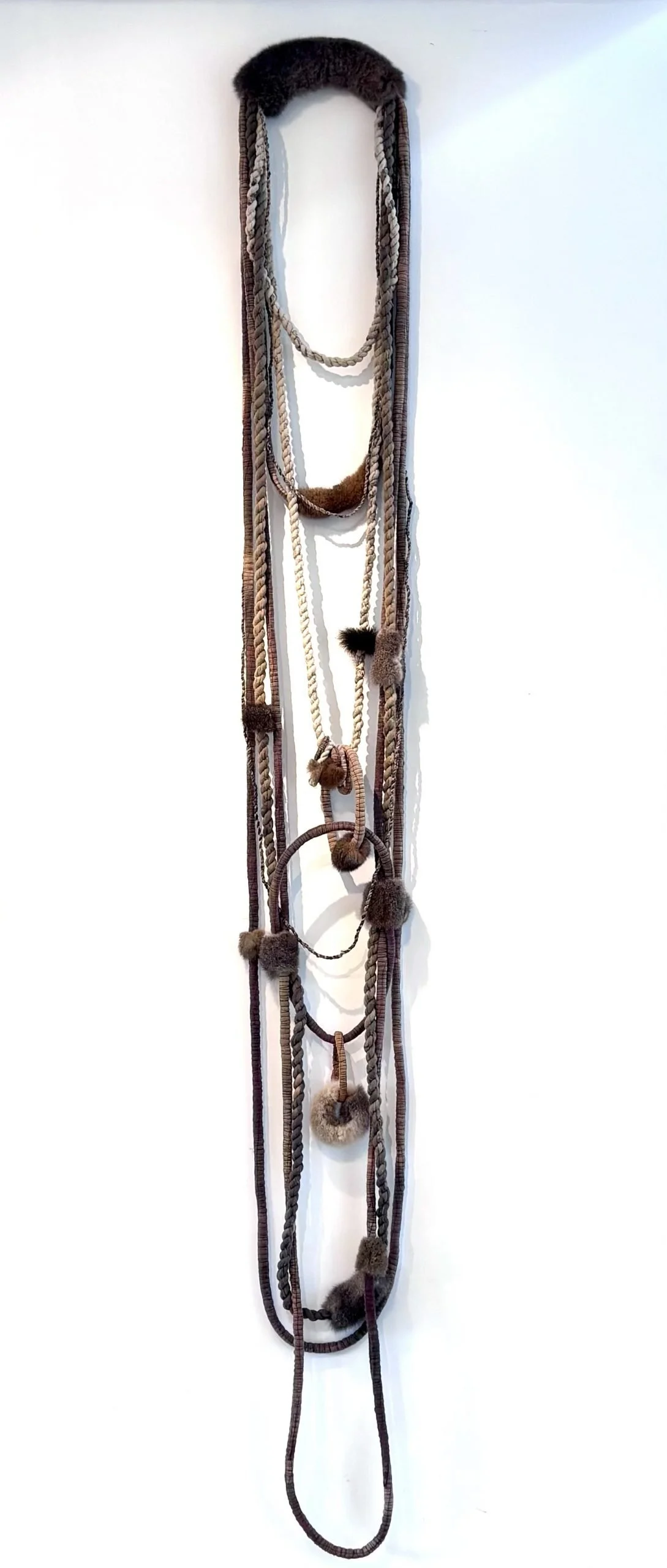
Juanita McLauchlan, ‘bugs/ river bank’, 2026, wooden blanket, possum fur, botanical contact print, cotton thread
Bagurrk Murrup–Kotahitanga is proudly supported by:
Radiant Pavilion is supported by the City of Melbourne Arts Grants.
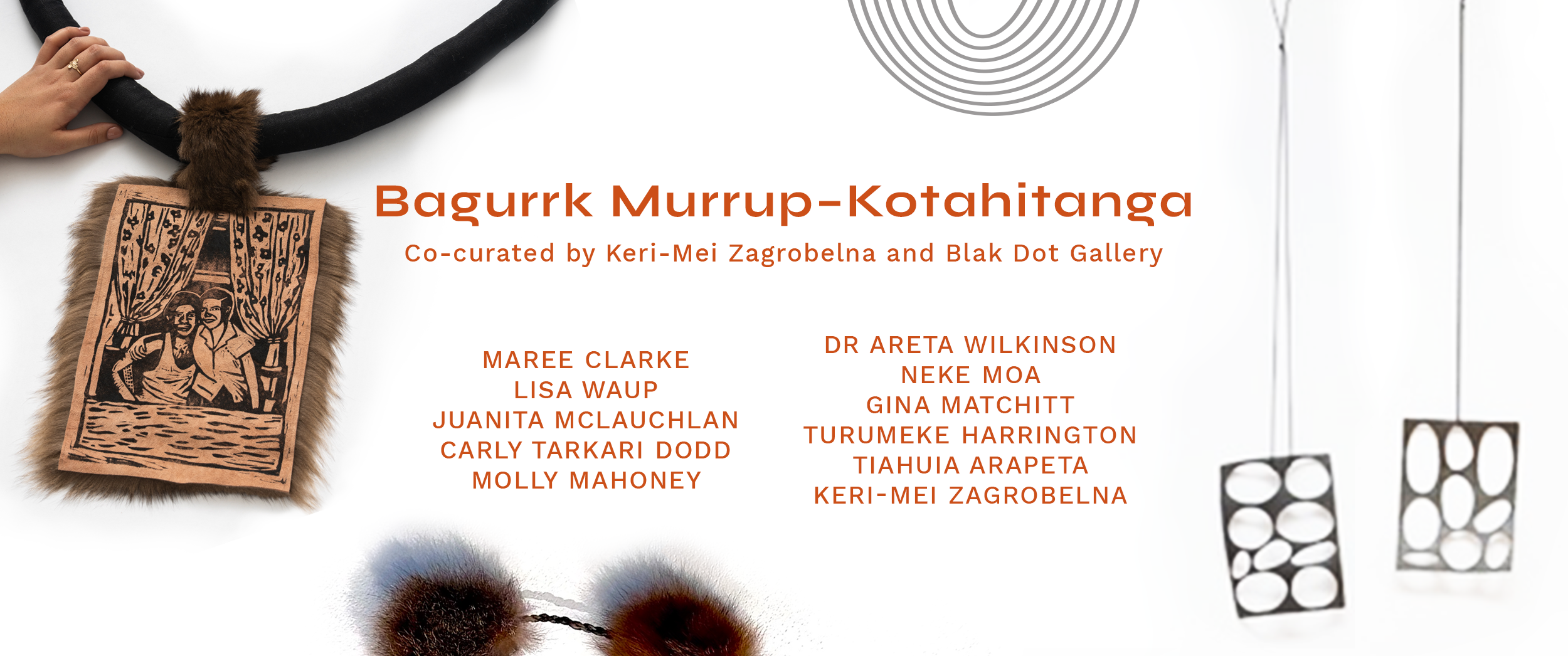
Featured artwork in exhibition banner: Lovers, 2026. Carly Tarkari Dodd. Kangaroo skin, water-based ink, linen and cotton. gulibaa/ three, 2026. Juanita McLauchlan. Silk organza, bush dye, possum skin. Ka Taka Te Wā – Time Passed, 2020. Areta Wilkinson. 4 Pendants, oxidised silver, polyester cord, kōhatu.